

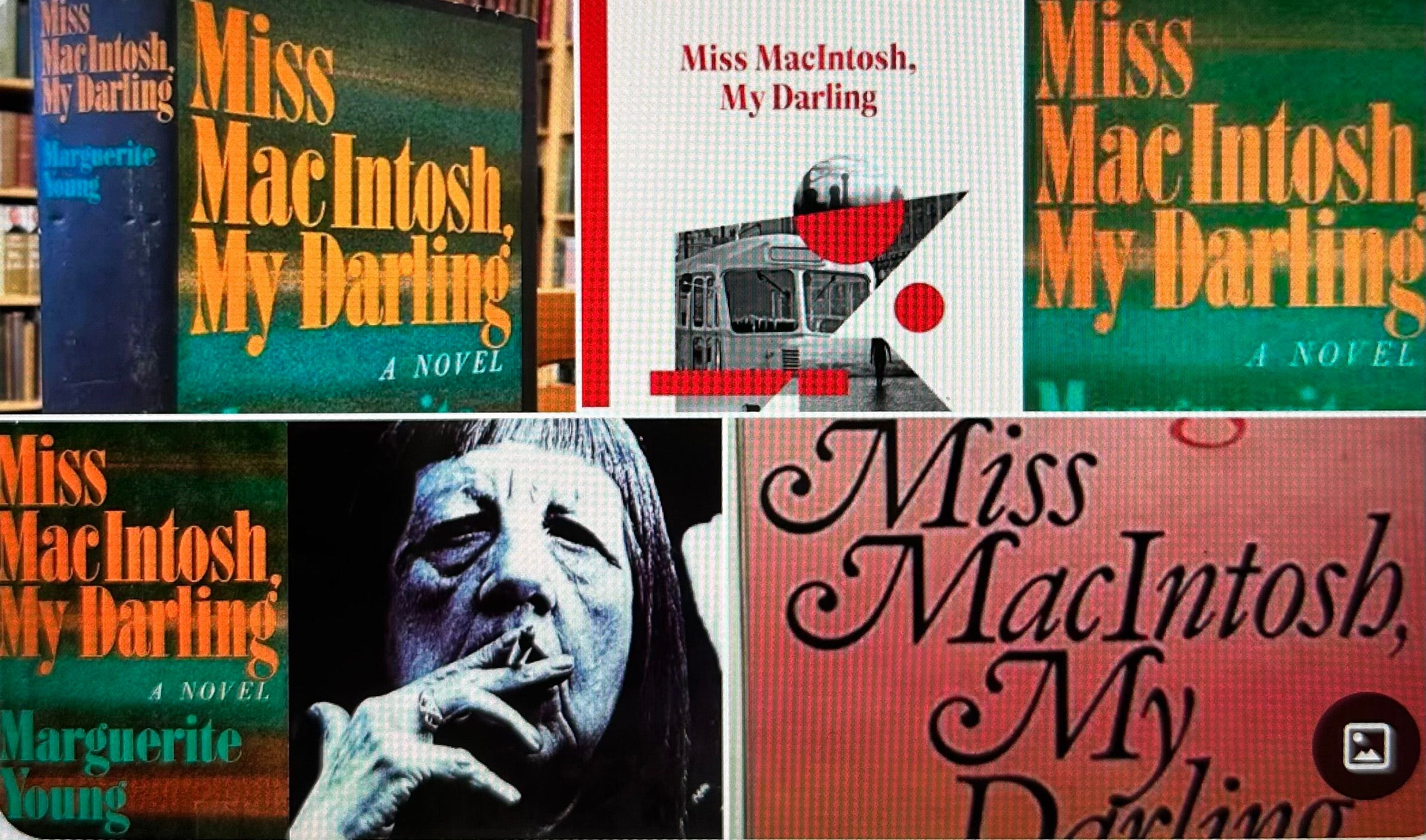
The usual move is to position Young as derivative of Proust, a kind of excessive American footnote to his achievement. That framing needs to be dismantled before the real comparison can begin.
First, Refusing the Hierarchy
The critical establishment has generally treated Proust as the master of interior consciousness and Young as someone who took it too far, went too long, lost control of what Proust perfected. This is wrong on multiple levels.
Young was not imitating Proust. She was working the same territory from a fundamentally different position: different culture, different gender, different relationship to time, memory, and the body. Where critics see excess and imitation in Young, they’re actually seeing something they don’t have the framework to evaluate: a different consciousness operating at the same depth.
What Proust Was Actually Doing
Proust’s great discovery that the one that À la Recherche du Temps Perdu is built on is that time is not linear and selfhood is not stable. The famous involuntary memory, the madeleine, the uneven paving stones, all these aren’t just beautiful set pieces. They’re arguments about the nature of consciousness itself.
For Proust, the self exists in fragments scattered across time, and the act of writing is the act of recovering and assembling those fragments into something that resembles wholeness. Memory is not retrieval. It is reconstruction. And every reconstruction changes what is remembered.
His expansion of consciousness was essentially temporal in that he showed the present moment contains multitudes of past moments, that experience is layered rather than sequential, that what we call the self is actually a palimpsest.
He was also mapping a very specific social world. The French aristocracy and bourgeoisie in decline. Consciousness in Proust is always consciousness within that social structure. The interior life is enormously rich but it is also deeply embedded in class, in status anxiety, in the performance of identity within a particular world.
What Young Was Actually Doing
Young starts where Proust ends and goes somewhere he couldn’t follow.
If Proust’s expansion was temporal, Young’s was ontological. She wasn’t asking how does memory construct the self across time; she was asking what is real at all, and can consciousness be trusted as an instrument of knowledge?
Where Proust’s narrator moves through society and memory with an ultimately coherent, if complex sensibility, Young’s Vera moves through a landscape where the distinction between real and imagined has fundamentally collapsed. This isn’t a failure of craft. It’s a different and more radical philosophical position.
Young was influenced by American transcendentalism, by Melville’s obsessive excess, by the carnival tradition, by surrealism and she brought all of that into the stream of consciousness form and pushed it past the point where Proust’s social anchors held. Her consciousness isn’t embedded in a recoverable social world. It’s operating in a space where the social world itself is revealed as mythological construction.
The Key Differences in Their Expansions
Memory vs. Imagination
Proust’s instrument is memory: involuntary, sensory, reaching backward into time. The consciousness he maps is retrospective. It finds meaning by recovering what was.
Young’s instrument is imagination: prospective, generative, reaching sideways into possibility. Her consciousness is not recovering a lost world. It is creating worlds as a survival strategy, as a philosophical act, as the only honest response to a reality that cannot be trusted.
This is a fundamental difference.
Proust says: the self can be recovered through memory.
Young says: the self is a continuous act of imagination, and there is no stable self underneath it to recover.
The Social World
Proust’s consciousness, however deep it goes, is always tethered to the social. Swann’s Way is also Swann’s world: the salons, the snobberies, the jealousies. The interior and exterior are in constant conversation. This is part of what makes Proust so pleasurable, the density of social observation grounds the metaphysical flight.
Young cuts that tether. Her social world is a carnival, a freak show, a drugged aristocrat in a New England mansion: deliberately marginal, deliberately excessive, deliberately outside the structures of normative social life. This isn’t weakness. It’s a philosophical choice. She’s showing you consciousness operating without the safety net of social consensus. What happens to the mind when it cannot defer to the shared reality of its class and culture?
That’s Young’s question, and it’s a harder one than Proust’s.
The Body
This is perhaps the deepest difference, and the most gendered one.
Proust’s consciousness is famously disembodied, or rather, the body appears as a source of sensation that triggers memory. The cork-lined room, the invalidism, the hypersensitivity of the body is present but as a kind of instrument, a receiver of impressions that feed the interior life.
Young’s bodies are grotesque, excessive, refusing containment: Catherine in a coma dreaming, the enormous Mrs. Hogden, he bald Miss MacIntosh, the Tavern’s bearded lady. These are not bodies as instruments of sensation; they are bodies that resist the myths written on them. Young is saying something Proust never had occasion to say: the female body is itself a site of consciousness, a text that has been written over, and the imagination is the act of writing back.
Where They Converge
Despite these differences, there is genuine common ground and acknowledging it makes the comparison more honest.
Both understood that the novel form itself had to be broken to contain what they were trying to say. The long sentence, the digression, the refusal of plot-driven momentum all these are not self-indulgences in either writer. They are formal arguments. The shape of the prose enacts the shape of consciousness, which is not tidy, not linear, not easily summarized.
Both were also deeply interested in the unreliability of perception or the way we construct rather than receive experience. Neither offers the reader a stable ground to stand on. Both demand that the reader become an active participant in the making of meaning rather than a passive receiver of story.
And both were, in their different ways, writing against the consolations of narrative. The classic novel offers resolution, closure, the satisfaction of pattern completed. Both Proust and Young refuse this: Proust because time and memory are genuinely irrecoverable; Young because reality itself is too unstable to resolve.
How They Each Expanded Consciousness
Proust expanded consciousness by showing its depth in time. After Proust, you cannot read your own experience as sequential, as simple, as fully present. He gave readers the tools to notice the involuntary, the layered, the way the past inhabits the present without announcement. This is a genuine perceptual gift and millions of people read Proust and begin to experience their own inner lives differently.
Young expanded consciousness by showing its freedom from consensus reality. After Young, if you’ve really read her, you cannot accept the shared fiction of the “real” without noticing the machinery behind it. She shows you consciousness operating at the outer limit of what the self can sustain, and in doing so she maps territory that no one else has charted. Her expansion is more frightening than Proust’s because it removes more of the floor. But it’s also more liberating, for exactly this reason: if reality is constructed, then it can be constructed differently. The imagination is not an escape from the real. It is the most real thing we have.
The Final Argument
Proust showed us how deep the past goes.
Young showed us how far the imagination can reach.
Together they represent the two great directions of consciousness: backward into memory and forward into possibility.
One is celebrated as a monument of Western literature. The other is barely in print.
It is not a literary judgment.
It is a political one.
This Substack and most of my work on Young is part of the long project of correcting it.